The students weren't the only ones who were impacted on the trip. Like Mrs. Staab mentioned in the video, many students are profoundly impacted by their experiences in Baojing. I'm no different from any of these students. I was affected in a number of ways. On the most basic level, I have learned about appreciation for what I have. Traveling to a rural area and adapting to the situations we faced was an constant exercise in flexibility. There were times when we had to go beyond our comfort zones (Miao Village), but these challenges only made us tougher. Having seen another side of the world makes you appreciate what you have. Trust me, only after an experience like this can one appreciate the miracles that are modern conveniences.
Being in China for a month also gave the Hawaii students a chance to practice their Chinese with native speakers. The best environment for learning a language is not necessarily a classroom. It can be anywhere, as long as the learner is immersed in both the language and culture. Any foreign language teacher will agree that the surroundings are equally as important, if not more, than textbooks and lectures. For it is in everyday usage that you really see how the language works, especially among native speakers. I'd say that the many people saw their Chinese improve over the trip.
But there is even more beyond that. Seeing the disparity between the countryside and major cities is a lesson in economics. When you think about it, it's startling how large the gap is. However, the gap will just continue to grow as the major cities in China leave the rest of China in the dust. It's up to people with the knowledge to try to bring about change. I believe that we did our share of the job by going to Baojing. It's possible that our efforts have inspired a handful of students to shoot for the stars. That's all it takes for our efforts to have been successful.
Tuesday, October 21, 2008

The Economics...
Hope Staab created the China Trip with education being the primary focus. However, after discussing the consequences of our actions, we came to the conclusion that economics is extremely relevant.
Mrs. Staab made it clear that the people from the countryside are vital to the whole economy of China. It's a mistake to think that the entire economy is based on the people working in huge corporations in the cities because the people from the countryside form the foundation for these people. 10% of the floating population in major cities like Beijing are migrant workers from rural areas. These are the people who build the massive skyscrapers. However, these people are marginalized in that they are just workers. The workers build the buildings but don't work in them afterwards.
People leave their villages to work as laborers because of financial reasons. The economy in many parts of rural China is not a cash economy. Often times, people will trade goods with each other. Obviously, this won't produce cash for education. That's why the people leave in search of work.
The two weeks of teaching don't have an immediate economic effect. What does is how the student takes the knowledge and applies it. By building a solid foundation to build upon, the students can become contenders in an extremely competitive game. Getting into college is the only bridge to lucrative jobs and success. If the student is inspired to work hard and master English along with other subjects, then he/she has a chance of breaking the cycle of poverty. Hopefully, this person would remember to give back to where he/she came from. So hypothetically, not only can a student's life be changed, but also the economy of where they came from.
What we are essentially doing is counteracting the disadvantages these students face by donating scholarship money and giving them skills that are crucial their economic well being in the future.
Mrs. Staab made it clear that the people from the countryside are vital to the whole economy of China. It's a mistake to think that the entire economy is based on the people working in huge corporations in the cities because the people from the countryside form the foundation for these people. 10% of the floating population in major cities like Beijing are migrant workers from rural areas. These are the people who build the massive skyscrapers. However, these people are marginalized in that they are just workers. The workers build the buildings but don't work in them afterwards.
People leave their villages to work as laborers because of financial reasons. The economy in many parts of rural China is not a cash economy. Often times, people will trade goods with each other. Obviously, this won't produce cash for education. That's why the people leave in search of work.
The two weeks of teaching don't have an immediate economic effect. What does is how the student takes the knowledge and applies it. By building a solid foundation to build upon, the students can become contenders in an extremely competitive game. Getting into college is the only bridge to lucrative jobs and success. If the student is inspired to work hard and master English along with other subjects, then he/she has a chance of breaking the cycle of poverty. Hopefully, this person would remember to give back to where he/she came from. So hypothetically, not only can a student's life be changed, but also the economy of where they came from.
What we are essentially doing is counteracting the disadvantages these students face by donating scholarship money and giving them skills that are crucial their economic well being in the future.
A Day in Baojing

We woke up this morning bright and early at 6:30 for Taichi. We were all pretty tired, but I think that the taichi is a good way to wake up. Plus, it was cool to watch a real taichi master perform right in front of us.

After Taichi, we quickly scarfed down breakfast and headed down to the school.
The lesson today was about pronoun usage. My students are becoming more interested in the material now that they are comfortable around me. Some of them are bright, and some of them struggle with the material. It's all right though, because we all help each other out.
Today's Chinese Hour was different because Thomas, Patrick, and Sabrina took control. Our activity for the day was to prepare lunch for ourselves. In Baojing, there isn't such a thing as ready made food. We went straight to the local market to purchase the fresh foods. I'll admit that these markets were a little intimdating at first. In America, we are so used to spic and span supermarkets where a lot of the food is packaged and supposedly sanitary. Here, the food is direct from the source. The butchers cut up the meat right in front of us. There were flies swarming all over the place. Vegetables were arranged in a heap on old tattered straw mats. After purchasing the food, we took a detour to the arcade for some fun. Then we went to Thomas' house. The home was small and bare. Thomas' mother insisted that she would do the cooking, so I accompanied the three students while they relaxed. It turns out that we helped a little by preparing the dumplings. Durng that time, we talked about how the english lessons were going, and about the activities planned for the next few days. I could tell from the tone of their voice that they were genuinely excited.
By the time lunch came around, I was already past my fear of the food from the market. I reasoned that the food was cooked and besides, it was delicious :)


In the afternoon, we headed back to school to participate in what the school officals called "Games". Board games, basketball, and soccer came to mind. We were totally wrong. The school had organized relay races for all the students. I participated in the three legged race with Patrick, and our team won that race!

After such a busy day, it was time to recuperate and prepare for the next day. Dinner was the same as usual, and we had our meeting at 9 PM. Many of us had comments about the lesson, and our T.A. Yoonji led the discussion about what changes were to be made. For example, we thought that students were more engaged when playing games and singing songs. Naturally, games and songs became the highlight of class the next day. Half an hour later, I headed off the bed.
Hope Staab: What the founder thinks..
Mrs. Hope Staab was gracious enough to have me interview her. Her interview reinforced the ideas behind the trip, and it shed even more light about our impact on the students.
Here's a brief summary:
-The trip was created with the intention of exposing students to the countryside, which is quite different from the cities.
-Students in the countryside have almost no chance for interaction with native speakers of English.
-The fact that we travel from Hawaii to Baojing hopefully motivates students to advance their english studies.
-Trip is also cultural based. Students from Hawaii learn about how the people in Baojing live. Cultural exchange, so to speak.
-Also, we deal with economics first hand. China is now a major part of Globalization, and one of the consequences is that the gap between rich and poor widens.
-Education is crucial in China, it determines your future. Therefore, we impact the students by giving them exposure to real English, not textbook english. Also, our presence proves to the students that the language is real and useful.
-By going on this trip, students are exposed to both the top and bottom of Chinese society.
Dai Manju: A young girl
http://query.nytimes.com/gst/fullpage.html?res=9E0CE5DF1E3CF930A35751C1A966958260
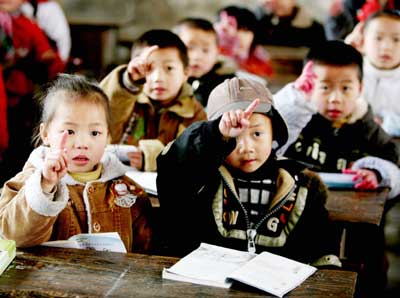
Here's a real story about a girl in rural China who epitomizes the struggle against adversity. Dai Manju is a sixth grader who loves going to school. The only problem is that she's already dropped out of elementary school four times, and she can't go back due to family circumstances. Her family can't afford to pay the tuition ($13 annually), and it makes sense. The average per capita income is less than $60 a year. Families aren't willing to spend so much money for education when they are trying to make ends meet on the most basic level. Peasants make up 70% of China's population, and for them, it's a struggle to even get an elementary education and learn how to read.
Her story took a turn for the better when her own teachers paid for her tuition. She eventually hopes to become a crafts teacher. It's hard to say whether Manju will be able to reach her goal; only 1 in 10 children graduates from high school. But what matters is that she has the determination to go as far as she can.
In Baojing, there are also students that face the same predicament. Besides doing direct service by teaching English, the Punahou Chinese Club also has fundraisers that allow these students to attend school. The Moral of the story here is that while these problems seem indomitable, there is still hope.
What's the current situation? Is the Government doing anything?
In order to put this all into context, here's a brief summary of the current educational situation in the countryside.
-Many of the teachers in the countryside are uncertified, meaning that they did not pass the Mandarin Chinese test. This is because these teachers only learned their local dialects.
-The Chinese Government is preparing to replace all 300,000 uncertified teachers. Considering that uncertified teachers can account for almost half of the teachers in certain rural areas, this will adversely impact the schools.
-Many local governments do not have the money to renovate schools or pay certified teachers.
-Rural areas don't attract certified teachers because of harsh working conditions and low salaries.
-The rural schools are allocated fewer resources than urban schools. As a result, many students do not have access to technology and proper learning resources.
Is the Government doing anything??
In fact, the Chinese Government is actually trying to close the gap between urban education and rural education. In 2006,the revision of the Compulsory Education Law began. The main reason for the revisions? Narrowing the disparity between the rural and urban areas. First, the revisions call for the abolishment of Key Classes and Schools. In China, certain school are designated with the "Key" label. It means that this school is for the elite minority of students, the cream of the crop. Being a Key School means that the government allocates more funds and resources to these schools. The obvious downside is that equality ceases to exist. Other schools that should be given the same funds and resources are neglected. Prime examples of these types of schools include many of the rural schools. By abolishing this system, the Government forces itself to treat all schools equally.
The second revision aims to create more Government investment in education. A study done in 2001 revealed that the central government spent only one fiftieth of its investment on compulsory education in rural areas. Furthermore, the appropriations from the central government represents a mere 11% of the national expenditure on compulsory education. At the end of 2004, primary schools in 163 counties and secondary schools in 142 counties were not receiving funds from the government. Instead, they had to find other sources of funds. Clearly, the government has not been making enough of an effort to educate China's children. Hopefully the government will be able to implement changes that can improve the system.
-Many of the teachers in the countryside are uncertified, meaning that they did not pass the Mandarin Chinese test. This is because these teachers only learned their local dialects.
-The Chinese Government is preparing to replace all 300,000 uncertified teachers. Considering that uncertified teachers can account for almost half of the teachers in certain rural areas, this will adversely impact the schools.
-Many local governments do not have the money to renovate schools or pay certified teachers.
-Rural areas don't attract certified teachers because of harsh working conditions and low salaries.
-The rural schools are allocated fewer resources than urban schools. As a result, many students do not have access to technology and proper learning resources.
Is the Government doing anything??
In fact, the Chinese Government is actually trying to close the gap between urban education and rural education. In 2006,the revision of the Compulsory Education Law began. The main reason for the revisions? Narrowing the disparity between the rural and urban areas. First, the revisions call for the abolishment of Key Classes and Schools. In China, certain school are designated with the "Key" label. It means that this school is for the elite minority of students, the cream of the crop. Being a Key School means that the government allocates more funds and resources to these schools. The obvious downside is that equality ceases to exist. Other schools that should be given the same funds and resources are neglected. Prime examples of these types of schools include many of the rural schools. By abolishing this system, the Government forces itself to treat all schools equally.
The second revision aims to create more Government investment in education. A study done in 2001 revealed that the central government spent only one fiftieth of its investment on compulsory education in rural areas. Furthermore, the appropriations from the central government represents a mere 11% of the national expenditure on compulsory education. At the end of 2004, primary schools in 163 counties and secondary schools in 142 counties were not receiving funds from the government. Instead, they had to find other sources of funds. Clearly, the government has not been making enough of an effort to educate China's children. Hopefully the government will be able to implement changes that can improve the system.
Exactly how important is English?
English is practically necessary for anyone who wishes to rise above the massive crowd that is the Chinese people. What many of the people want is to escape rural China and its backwardness. The only way is to get into college. We know that English is tested on the College Entrance Examination, but how about after that? The struggle to succeed does not end with admission to a college. There is yet another test that can determine one's fate: The CET (College English Test). Many Colleges now require students to pass this exam before they can obtain their Bachelor's Degree. Furthermore, many companies now require CET certification from job applicants. Clearly, the student needs English in order to have options.

Obviously, English is being learned so that the Chinese people can become a part of the larger world around them. The story of Li Yang is one that shows how far people are willing to go in order to learn English. Li Yang is an English teacher with his own company: Li Yang Crazy English. He has become a rock star in China due to his flamboyant style and methods of teaching English. One of his trademarks is shouting. He says that shouting "releases the international muscles". It's this kind of teaching that drives people into hysterics. While experts are still divided as to whether Li Yang's methods actually teach English effectively, one thing is clear. The people of China regard english as more than a language. It represents the possibilities of life. English can get you a job, help you jump from obscurity in a village to wealth and status, or even attract a partner. English is a way for a Chinese person to rise above the crowd. For the students in the countryside, it could very well be one of the few ways to leave their villages.
Obviously, English is being learned so that the Chinese people can become a part of the larger world around them. The story of Li Yang is one that shows how far people are willing to go in order to learn English. Li Yang is an English teacher with his own company: Li Yang Crazy English. He has become a rock star in China due to his flamboyant style and methods of teaching English. One of his trademarks is shouting. He says that shouting "releases the international muscles". It's this kind of teaching that drives people into hysterics. While experts are still divided as to whether Li Yang's methods actually teach English effectively, one thing is clear. The people of China regard english as more than a language. It represents the possibilities of life. English can get you a job, help you jump from obscurity in a village to wealth and status, or even attract a partner. English is a way for a Chinese person to rise above the crowd. For the students in the countryside, it could very well be one of the few ways to leave their villages.
Monday, October 20, 2008
How exactly did we do this?


Both direct service and lifestyle/ personal gestures were done during our trip. The act of traveling to China and teaching there is direct service. Every morning we would have an english class that consisted of vocabulary, sentence structure, and grammar. The rest of the day would be spent exploring the city and area through activities such as preparing a meal, boating local rivers, and experiencing the day to day life of a student. Obviously, these activities were part of the lifestyle/ personal gestures. By spending lots of time with these students, we made an effort to make English more tangible. During this time, English became a real part of their lives through conversation. It wasn't just a weird language that they didn't understand. Hopefully this sparked more interest in English.
Saturday, October 18, 2008
Why are we doing this??


English is an important language all over the world, especially in China. Now that it is rapidly becoming a superpower, many people need English in order to be a part of this booming growth. This is why English education begins early in China and is treated as a core subject in all schools.
In Rural China, the students are at a natural disadvantage because of the lack of both resources and a competent education system. Students in China are expected to have a solid grasp of the English language by the time college entrance exams come around. The students in large developed cities have access to qualified English teachers. Unfortunately, Baojing's English teachers are not proficient enough in English to effectively teach the language. The consequences are astounding. Every person's future in China depends on whether or not they pass rigorous entrance exams into college. English accounts for roughly a fourth of the exam, students can easily do poorly on the exam if they don't master the material. In the worst case scenario, the student won't be able to perform well enough on the exam, and therefore be faced with the same future as their parents (selling fruit). The reason students are pushed so hard to achieve high marks is that education is the closest guarantee to a secure future.
This is where we come in. I know that it's impossible to teach a whole lot in two weeks, but the importance lies in our intention. These two weeks could be the only time these students have contact with foreigners, so it's crucial to make the most of this time. By helping to reinforce the students' rudimentary foundation of English, we give them something to build off of. Hopefully, they are inspired to focus more on English and genuinely learn it with interest and curiosity. I believe that the best learning environment is one that is charged with enthusiasm. I'm hoping that the hours we spent with the students inside and outside of the class gave them a new outlook on English. In the end, it boils down to cultivating interest in English and providing the students with resources that are otherwise unavailable to them (English textbooks).
Why Baojing?
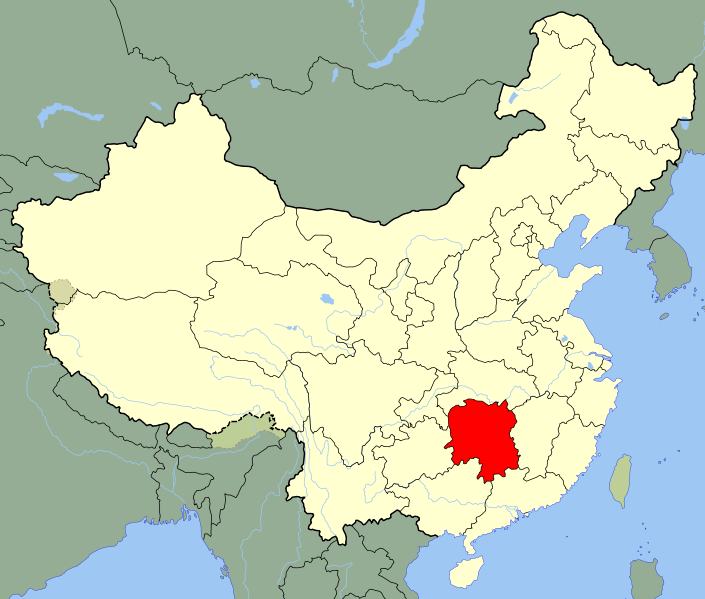
So.. this past summer I traveled with a group of 30 students from the academy to China for one month. This trip is organized by the Wo International Center every other summer. Originally I signed up for the trip because a friend encouraged me to, but I quickly realized that this trip is more than just traveling for pleasure.
The main focus of the trip is a two week stay in the city of Baojing, located in Hunan Province. Baojing is a small rural city that is not like the poster cities of China: Beijing and Shanghai. By our American standards, it's grimy, undeveloped, and poverty stricken. But I think that Baojing's strength lie in its people, primarily the students. We were to teach English to middle and high school students in a summer camp setting. Every morning we'd spend about two hours teaching, and then we'd spend the rest of the day doing activities of all sorts. This happened for two weeks.
Before the trip, I didn't really think about the impact we would have on the students. Now I hope that our impact lives on in each of these students.
Subscribe to:
Comments (Atom)
